

Do you have a high forehead and want to lower your hairline? Then you’ll quickly find yourself faced with two options: a forehead reduction or a hair transplant. Both give you a lower hairline, but the process involved is very different. In this blog, we’ll honestly compare the differences so you can make the choice that’s right for you.
What is a forehead reduction?
A forehead reduction, also known as a forehead reduction surgery, is a surgical procedure. The surgeon cuts away a strip of skin from your forehead along your hairline and pulls your scalp forward. This lowers your hairline in one go.
You’ll see the results immediately. However, there will always be a scar along your hairline. For some women, it’s barely noticeable; for others, it remains visible, especially if you wear your hair pulled back.
What is a hair transplant for a high forehead?
During a hair transplant, we lower your hairline using your own hair. The doctor removes hair follicles from the back of your head and implants them, one by one, into your new hairline. There is no incision made in your forehead.
The doctor designs your hairline based on the proportions of your face. The new hair grows in the same natural direction, resulting in a soft and natural look. You will need to be patient, however: you’ll see the first signs of growth after a few months, and the final result after about a year.
A Summary of the Differences
| Forehead Reduction | Hair Transplant | |
|---|---|---|
| Type of treatment | Forehead surgery | Your own hair is transplanted |
| Scar | A line along your hairline | No incision on your forehead |
| Result | Immediately visible | After about 12 months |
| Filling in indentations | Not possible | Possible |
Which option is right for whom?
A forehead reduction may be a good option if you want quick results and if your scalp is flexible enough to be pulled forward. A hair transplant is a better choice if you also have receding temples, if you don’t want a scar along your hairline, or if a soft, natural shape is important to you.
During a personal consultation with a doctor, you’ll work together to determine which option best suits your face, your hair, and your preferences.
Have you had a forehead reduction yet?
Many women come to us after undergoing a forehead reduction. The scar along their hairline remained visible, and they were eager to conceal it. With a hair transplant in and around the scar, we can make it less visible so that it blends in with your hairline. Read more about hair transplants in scars.
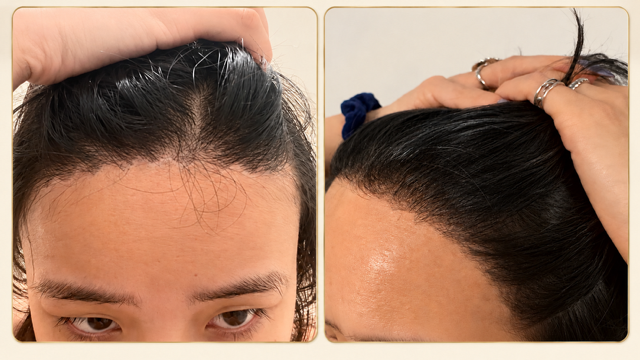
Why Sonja Decided to Get a Hair Transplant
Sonja, the founder of BeautyGainz, had been self-conscious about her high forehead for years. In 2022, she had her hairline lowered with a hair transplant. Because she knows how daunting that step can be, she now guides other women through the process, from the initial consultation to one year after treatment. Read her story.
Sonja: “Forehead reduction surgery is mainly only available in Turkey. Since my daughter was still very young, that wasn’t an option for me. It’s also more expensive, and personally, I don’t like the idea of being under general anesthesia.”
How much does a hair transplant cost for a high forehead?
At our partner clinic in Capelle aan den IJssel, prices start at €4,000, and the treatment team consists entirely of women. In Istanbul, the all-inclusive price is €2,600, including hotel and transfers. During a free consultation, you’ll receive a quote tailored to your situation.
QUESTIONS
Frequently Asked Questions
Is a hair transplant more painful than a forehead reduction?
You will receive a local anesthetic during a hair transplant. Your scalp may be a little sensitive in the days following the procedure. The doctor will discuss the recovery process with you beforehand.
Can I have both done?
Yes. Some women first have a forehead reduction and then a hair transplant later on to hide the scar or fill in receding hairlines.
How much lower can my hairline go with a hair transplant?
That depends on your donor hair and your facial proportions. During the consultation, we’ll determine what’s realistic.
Curious about your options?
During a free online consultation, we’ll discuss your needs, you can ask any questions you have, and we’ll explore the options.
We work with a maximum of 7 women per month.